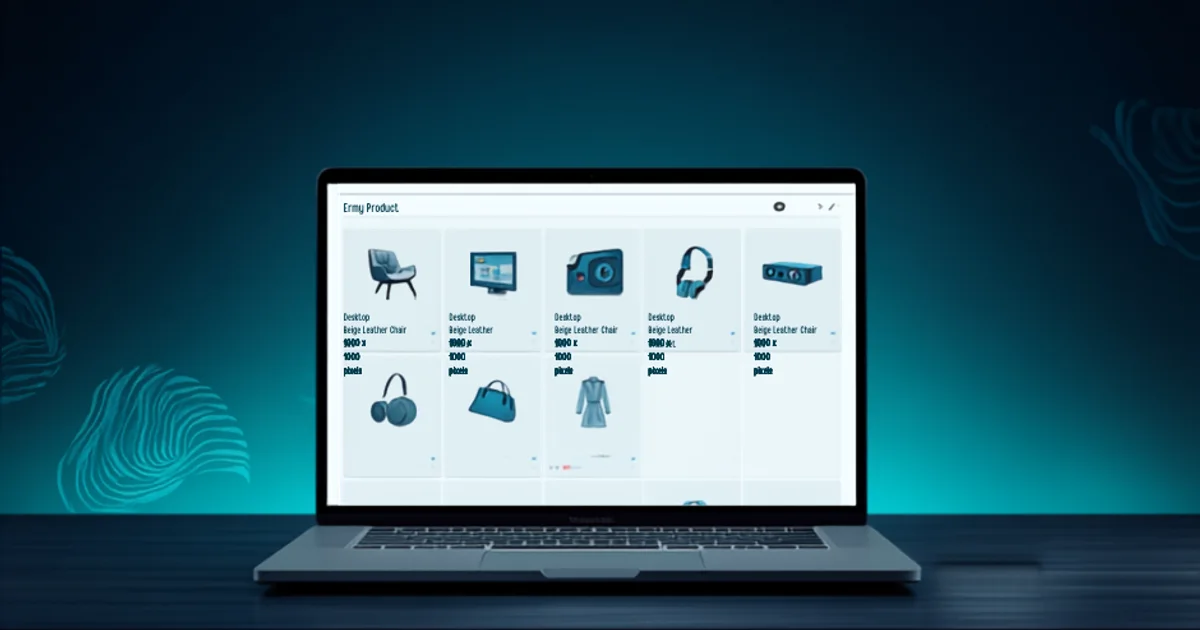
Picture two Gambian furniture shops of similar size and quality, both a short drive apart. One has nothing online beyond an old Facebook page with a handful of scattered photos. The other has an organized product catalogue a customer can browse before ever walking in — by category, with prices, and reachable through a website link or a WhatsApp Business Catalog. Both shops sell good furniture. Only one of them is actually visible to the customer who's already decided to look before they leave the house.
That gap — not product quality, not price, not location — is often the real difference between a shop that gets the enquiry and one that doesn't.
How Customers Research Products Today
The habit of "looking something up first" now runs across nearly every kind of purchase, large or small. Whether someone ends up buying online or walking into a physical shop, a growing number of shoppers start by checking what's available, what it costs, and whether the business looks credible — often from their phone, often before they've made up their mind to buy at all.
This isn't a claim specific to The Gambia, and it shouldn't be dressed up as one. It's a broad, well-documented pattern seen across many markets: research happens before the visit, not just during it. What matters locally is simpler — if a Gambian retailer isn't part of that early research step, they're not being compared at all. They're just not in the running for a decision that's often already half-made by the time someone shows up.
The Problem With Relying Only on Physical-Store Visits
A shop that depends entirely on walk-in traffic is betting that every potential customer will show up cold, with no idea what's in stock, what it costs, or whether it's worth the trip. That's a lot to ask of someone's afternoon.
It also means every basic question — "do you have this in stock," "how much is that one," "do you deliver" — has to be answered one person at a time, by phone or in person, over and over. For a shop owner or a small staff, that's real time spent on repetitive information that a catalogue could simply show up front. And for the customer, it's friction: a reason to try a competitor who made the answer easier to find.
What a Digital Product Catalogue Actually Is
A digital product catalogue doesn't have to mean a full online store with checkout and payment processing. At its simplest, it's an organized, browsable list of what a business sells — photos, names, prices, and short descriptions — reachable in one of a few practical forms:
- A dedicated page (or set of pages) on a business website
- A WhatsApp Business Catalog, which lets customers browse a business's full product list inside a chat instead of receiving photos one at a time
- Product listings on a Google Business Profile, which can show nearby searchers what's in stock directly on Google Search and Maps
- A well-organized Facebook Page Shop, with products grouped into browsable collections
Most businesses benefit from combining more than one of these rather than picking a single channel — more on that below.
Benefits for Gambian Retailers
None of this requires becoming a different kind of business. The realistic, honest benefits are more modest than "more sales" — and more useful because of it:
- Fewer repeated basic questions. Price, availability, and product details are visible up front, so conversations start further along.
- A more professional first impression. An organized catalogue signals a business that takes itself seriously, the same way a clean shop floor does.
- Better-prepared customers. Someone who has already browsed knows roughly what they want, which makes both the enquiry and the eventual visit faster and more focused.
- Local discoverability. A customer searching nearby on Google Maps, or asking a friend for a shop's WhatsApp, can actually find and preview what's on offer instead of relying on secondhand descriptions.
None of this is a guarantee of increased sales or revenue. It's a reduction in the friction and guesswork that currently sits between a genuinely interested customer and a completed enquiry.
Examples Across Retail Types
Furniture. A buyer comparing sofas or bedroom sets benefits enormously from being able to browse styles and rough price ranges before committing to a showroom visit — arriving already narrowed down to two or three options rather than starting from zero.
Electronics. Specifications and pricing matter more here than almost any other category. A shopper deciding between two phone models or generator sizes wants to compare before, not during, a conversation with a salesperson.
Fashion. Visual browsing is the whole point — a catalogue lets a customer see current stock, sizes, and styles without a trip, and share a specific item link with a friend for a second opinion.
Hardware. Less visually driven, more list-driven: customers often know the exact item they need (a specific fitting, tool, or material) and want to confirm it's in stock before making a special trip.
Website Catalogue vs. Social Media Alone
Posting product photos to Facebook or Instagram is better than nothing, but a social media feed is not a catalogue — older posts get buried, there's no reliable way to browse everything currently available, and someone arriving fresh to the Page has no organized starting point.
A dedicated website catalogue (or a properly set-up Facebook Shop with real product collections, or a WhatsApp Business Catalog) solves that specific problem: everything currently for sale, organized and browsable, in one place that doesn't scroll away. Social media remains valuable for reach and everyday posting — it just isn't a substitute for an actual catalogue.
How Customers Can Enquire
The point of a catalogue isn't to replace a real conversation — it's to make the conversation start from a better place. A good setup lets a customer go from "browsing" to "asking" in one step: a WhatsApp link next to each product (or category) that opens a chat with the item already referenced, or a simple contact form for a website-based catalogue. Either way, the business receives a specific, informed enquiry instead of a vague "do you have anything nice in stock?" message.
What a Good Catalogue Should Contain
A useful catalogue doesn't need to be elaborate. At minimum, it should have:
- Clear photos of the actual products being sold (not generic stock images)
- Accurate, current prices — or a clear note where pricing genuinely varies
- Short, honest descriptions (materials, sizes, key features)
- Products grouped into sensible categories, not one long unsorted list
- An obvious way to ask about or order any specific item
A Practical Conclusion
None of this is about chasing a trend or building something flashy. It's about closing a specific, ordinary gap: a real customer, already interested, unable to see what a business actually has to offer before they either give up or go somewhere easier to check. For an established Gambian retailer — furniture, electronics, fashion, hardware, or general goods — an organized digital catalogue, reachable however customers already prefer to browse, is one of the more practical improvements available, without needing to reinvent how the business runs.