Two customers message a salon on the same afternoon, asking for the same Saturday slot. Both get a friendly "yes, see you then." Nobody finds out until they both walk in at 2pm. Nobody did anything wrong — the owner was juggling a dozen other chats, and there was no single place showing that the slot was already taken. This is not a WhatsApp problem exactly. It's a scheduling problem that WhatsApp was never built to solve.
Why WhatsApp Works So Well — and What It Was Never Built For
WhatsApp earned its place as the default way Gambian businesses talk to customers for good reason: it's where customers already are, it's free, and it handles conversation, photos, and quick questions better than almost anything else. Nothing about a booking system should replace that.
What WhatsApp doesn't have — and was never designed to have — is a calendar. There's no built-in way to see, at a glance, what's already booked. No automatic check that stops a business from promising the same time slot twice. Every booking lives inside a chat thread, which means the only record of it is scattered across however many conversations happened that week. That's fine at low volume. It becomes the actual source of double-bookings and missed appointments once a business is busy enough that no one person can hold the whole week in their head.
The Real Cost of Manual Scheduling
The cost isn't dramatic — it's small and constant. A staff member re-reading old messages to confirm what was agreed. A customer who never gets a reply because their message got buried under twenty others. A slot held for someone who never confirms, while someone else who would have shown up was never asked. None of this shows up as a single big loss. It shows up as friction, week after week, that a business owner often can't quite name but can feel.
This isn't a claim that Gambian businesses are doing something wrong — it's the predictable result of running a real-time scheduling problem through a tool built for messaging, not for calendars. Any business anywhere hits the same wall once volume passes what one person can track manually.
What a Dedicated Booking System Actually Adds
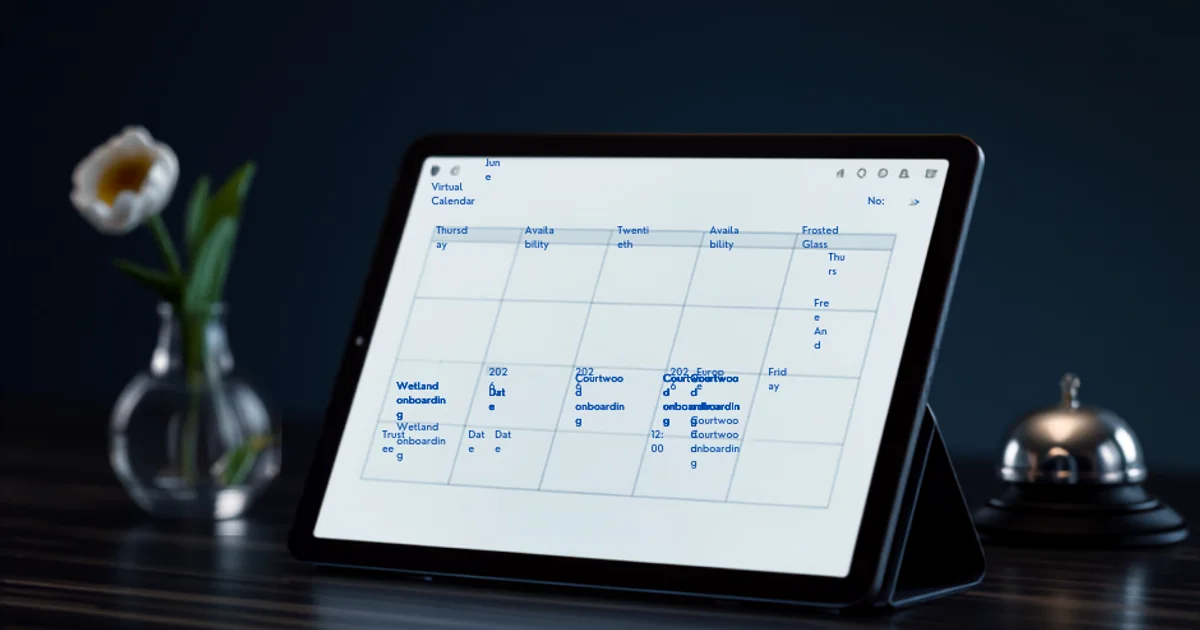
A booking system's whole job is the one thing WhatsApp doesn't do: it keeps a single, accurate picture of what's available and what's already taken, and it checks that picture automatically before confirming a new booking. In practice that means:
- One real calendar, not a memory of scattered chats
- Automatic conflict-checking — the same slot genuinely can't be booked twice
- A record staff can actually see, not something locked inside one person's phone
- A link customers can use anytime — including outside business hours, when there's no one to answer a message at all
None of this is about replacing conversation. It's about making sure the thing being agreed to in that conversation is actually still true.
Examples Across Service Types
Hotels and guesthouses. Room availability changes constantly, and a booking confirmed by message with no calendar behind it risks a guest arriving to a room already given to someone else.
Salons and barber shops. Appointment slots are short and back-to-back — exactly the situation where one missed double-booking creates a visible, awkward moment in front of both customers.
Clinics. Beyond the scheduling problem itself, patients benefit from a clear, confirmed appointment time rather than an informal WhatsApp exchange that's easy to lose track of.
Tour operators. Group capacity and specific dates/times make availability genuinely finite — a dedicated system prevents overselling a tour the same way a hotel system prevents overselling a room.
WhatsApp and a Booking System, Not One or the Other
The realistic setup for most Gambian service businesses isn't "switch away from WhatsApp." It's pairing the two: a booking link — shared over WhatsApp, added to a Google Business Profile, or placed on a website — that a customer taps to see real availability and confirm a real slot, with WhatsApp still handling every question before and after. Google's own Business Profile Bookings feature is built around exactly this pattern: a "Book" button that sends customers to a business's actual booking system, not a generic contact form.
Because most customers in The Gambia are reaching a business from a phone, not a desktop, this only works if the booking link itself is quick and comfortable to use on mobile — a heavy, desktop-oriented booking page defeats the purpose. Mobile phones remain the primary way most people access the internet across West Africa, which makes a fast, mobile-friendly booking link far more useful in practice than a polished desktop tool few customers will ever open on a laptop.
What a Good Booking System Should Contain
At minimum, a booking system worth using should have:
- A real-time calendar that actually blocks a slot once it's taken
- A simple, mobile-friendly booking link — no app download required for the customer
- Automatic confirmation so both sides have the same record of what was agreed
- Enough flexibility to handle a business's real structure (multiple staff, multiple rooms, group sizes) rather than forcing everything into one shared calendar
- A way for staff to see the full picture, not just whoever happens to be holding the phone
A Practical Conclusion
None of this requires a business to become something it isn't, or to abandon the tool that already works well for conversation. It requires closing one specific, ordinary gap: the difference between a slot that's probably still free and a slot that's actually confirmed free. For a Gambian hotel, salon, clinic, or tour operator working from WhatsApp alone, a dedicated booking system sitting alongside it — not replacing it — is one of the more practical, low-drama improvements available.